博客

  • 精通Windows Server 2008命令列與PowerShell

    精通Windows Server 2008命令列與PowerShell

    內容簡介:

    本書全面地介紹了Windows Server 2008命令列、PowerShell和腳本的使用,包括檔和資料夾的管理、磁片管理、系統管理、活動目錄管理、網路管理、網路服務管理、系統診斷、故障恢復、系統安全、批次處理和設定檔,PowerShell等一系列的命令列管理方式以及腳本。本書側重於系統、服務、網路和安全管理應用,不僅介紹了各個命令的語法和參數,還列舉了大量實例,能夠迅速提高讀者的動手能力和技術水準。

    本書適合於從事系統管理和網路管理的專業人員,同時適合於電腦及相關專業的學生,也可作為電腦培訓學校的教材。

    (更多…)

  • Core Web Application Development with PHP and MySQL(英文版CHM)
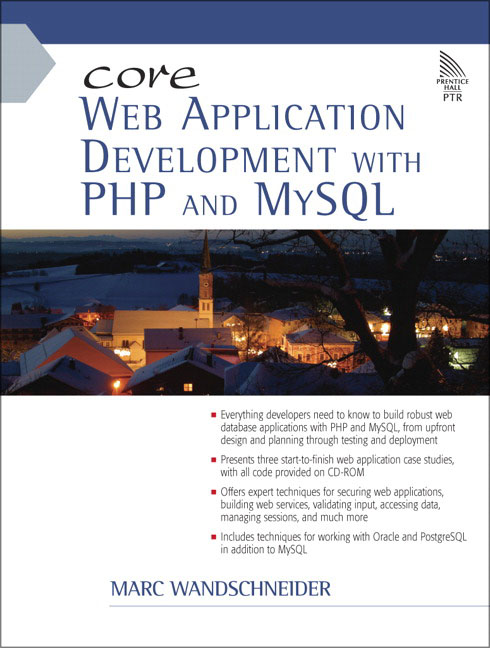
    Core Web Application Development with PHP and MySQL(英文版CHM)

    OverView

    The programmers guide to building robust web applications with PHP and MySQL

    This is a comprehensive, practical guide for programmers who want to develop production-quality, database-enabled web applications with PHP and MySQL. Long-time developer Marc Wandschneider systematically addresses the entire process: not only coding, but also upfront application, user interface and database design, PLUS security, testing, and more.

    Youll walk through building three applications from start to finish: a calendaring system, a weblog engine, and an e-commerce store. Along the way, youll master essential strategies for creating robust web database applications and learn how to avoid the common pitfalls that trip up many developers moving to PHP and MySQL.

    (更多…)

  • Sams Teach Yourself Windows Server 2008 in 24 Hours

    Sams Teach Yourself Windows Server 2008 in 24 Hours

    In just 24 lessons of one hour or less, you will be able to install and configure Microsoft Windows Server 2008 and its various services for any size network. Using a straightforward, step-by-step approach, each lesson builds on the previous ones, enabling you to learn the essentials of Windows Server® 2008 from the ground up.

    (更多…)

  • Microsoft C# Windows 程式設計(中文版)

    Microsoft C# Windows 程式設計(中文版)

    微軟圖書必為精品

    目錄

    第一章 控制台本身
    1.1 C#版本
    1.2 程式分析
    1.3 C#名稱空間
    1.4 控制台I/O
    1.5 C#資料類型
    1.6 運算式和操作符
    1.7 條件和迴圈
    1.8 對象的跳躍
    1.9 使用C#的關鍵特性進行程式設計
    1.10 靜態方法
    1.11 異常處理
    1.12 拋出異常
    1.13 獲取和設置屬性
    1.14 構造函數
    1.15 實例和繼承
    1.16 更宏偉的藍圖
    1.17 命名約定
    1.18 幾句題外話
    第二章 歡迎使用Windows Forms
    第三章 基本結構
    第四章 文本輸出中的練習
    第五章 直線、曲線和區域填滿
    第六章 接近鍵盤
    第七章 頁面和變換
    第八章 滑鼠的歷史
    第九章 文本和字體
    第十章 計時器和時間
    第十一章 圖像和點陣圖
    第十二章 按鈕、標籤和捲軸
    第十三章 貝茲曲線和其他樣條曲線
    第十四章 菜單
    第十五章 路徑、區域和裁剪
    第十六章 對話方塊
    第十七章 畫刷和畫筆
    第十八章 文字方塊、清單方塊和旋轉框
    第十九章 字體
    第二十章 工具列和狀態列
    第二十一章 列印
    第二十二章 樹形視圖和列表視圖 
    第二十三章 中繼檔
    第二十四章 剪切、拖動和放置

    附錄A 文件和流
    A.1 最基本的文件I/O類
    A.2 FileStream的屬性和方法
    A.3 FileStream的問題
    A.4 其他流類型
    A.5 讀寫文本
    A.6 二進位檔案I/O
    A.7 Environment類
    A.8 檔案名和路徑名解析
    A.9 並列的類
    A.10 使用目錄
    A.11 檔操作和資訊
    附錄B 數學類
    B.1 數數值型別
    B.2 檢查整數溢出
    B.3 小數類型
    B.4 浮點數的無窮大和無窮小
    B.5 Math類
    B.6 浮點數的餘數
    B.7 冪和對數
    B.8 三角函數
    附錄C 字串理論
    C.1 char類型
    C.2 String的構造函數和屬性
    C.3 複製字串
    C.4 轉換字串
    C.5 連接字串
    C.6 比較字串
    C.7 搜索字串
    C.8 去首尾空格和填補字元串
    C.9 字串操作
    C.10 格式化字串
    C.11 陣列排序和搜索
    C.12 StringBuilder類

    點擊下載:  Microsoft C# Windows 程式設計(中文版)

  • JavaScript 2.0:The Complete Reference, Second Edition(CHM)

    JavaScript 2.0:The Complete Reference, Second Edition(CHM)
    本書目錄:

    JavaScript 2.0—The Complete Reference, Second Edition  
    Part I – Introduction
    Chapter 1 – Introduction to JavaScript
    Chapter 2 – JavaScript Core Features—Overview
    Part II – Core Language
    Chapter 3 – Data Types and Variables
    Chapter 4 – Operators, Expressions, and Statements

    (更多…)

  • 《企業虛擬化實戰—VMware篇》

    《企業虛擬化實戰—VMware篇》本書深入淺出地介紹了電腦虛擬化技術及其應用實例。

    全書共分7章和7個附錄,內容包括:虛擬化基礎概念,虛擬化技術初探,企業級虛擬化解決方案概覽,企業級虛擬化解決方案實戰,企業級虛擬化解決方案進階應用。附錄內容包括對esx3i的安裝和配置,vi中常用的命令工具以及免費工具和網路資源。

    本書適用於關注虛擬化技術的企業it管理員以及系統集成商的技術人員和it技術愛好者。此外,本書對承擔企業cio、cto角色的讀者也具有一定的參考價值。

    (更多…)

  • The Linux Networking Architecture

    The Linux Networking Architecture

    This unique Linux networking tutorial/reference by experts provides readers with a practical overview and understanding of the implementation of networking protocols in the Linux kernel. The book shows how networking behavior and protocols can be implemented within the Linux operating system. Introduction to the Linux kernel, mainly focusing on the upcoming kernel version 2.4 but also valid for version 2.2 kernels. The organization of the book follows the TCP/IP layering model, beginning with the kernel’s network device drivers, continuing with link-layer protocols such as PPP, and finally giving a description of all core protocols of the TCP/IP protocol family. Additional supplementary protocols such as RSVP, IP Security, and Mobile IP are also covered. For anyone interested in Linux or networking, including network programmers and administrators.

    Copyright ii
         Preface xiii
            Organization of this Book xiv
            Additional Sources of Information xv
            Conventions Used in this Book xvi
            Acknowledgments xvii
         Part I:  The Linux Kernel 1
            Chapter 1.  Motivation 3
            Section 1.1.  The Linux Operating System 4
            Section 1.2.  What is Linux? 5
            Section 1.3.  Reasons for Using Linux 6
            Chapter 2.  The Kernel Structure 9
            Section 2.1.  Monolithic Architectures and Microkernels 11
            Section 2.2.  Activities in the Linux Kernel 12
            Section 2.3.  Locking—Atomic Operations 17
            Section 2.4.  Kernel Modules 23
            Section 2.5.  Device Drivers 29
            Section 2.6.  Memory Management in the Kernel 31
            Section 2.7.  Timing in the Linux Kernel 35
            Section 2.8.  The Proc File System 40
            Section 2.9.  Versioning 43
         Part II:  Architecture of Network Implementation 45
            Chapter 3.  The Architecture of Communication Systems 47
            Section 3.1.  Layer-Based Communication Models 47
            Section 3.2.  Services and Protocols 52
            Chapter 4.  Managing Network Packets in the Kernel 55
            Section 4.1.  Socket Buffers 55
            Section 4.2.  Socket-Buffer Queues 66
            Chapter 5.  Network Devices 71
            Section 5.1.  The net_device Interface 73
            Section 5.2.  Managing Network Devices 82
            Section 5.3.  Network Drivers 92
         Part III:  Layer I + II—Medium Access and Logical Link Layer 115
            Chapter 6.  Introduction to the Data-Link Layer 117
            Section 6.1.  Structure of the Data-Link Layer 117
            Section 6.2.  Processes on the Data-Link Layer 119
            Section 6.3.  Managing Layer-3 Protocols 127
            Chapter 7.  The Serial-Line Internet Protocol (SLIP) 132
            Section 7.1.  Introduction 132
            Section 7.2.  Slip Implementation in the Linux Kernel 134
            Chapter 8.  The Point-to-Point Protocol (PPP) 145
            Section 8.1.  Introduction 145
            Section 8.2.  PPP Configuration in Linux 148
            Section 8.3.  PPP Implementation in the Linux Kernel 150
            Section 8.4.  Implementing the PPP Daemon 158
            Chapter 9.  PPP over Ethernet 161
            Section 9.1.  Introduction 161
            Section 9.2.  PPPOE Specification in RFC 2516 161
            Section 9.3.  Implementation in the User Space 163
            Section 9.4.  Implementation in the Linux Kernel 164
            Chapter 10.  Asynchronous Transfer Mode—ATM 168
            Section 10.1.  Introduction 168
            Section 10.2.  Implementing ATM in Linux 169
            Section 10.3.  Configuration 177
            Chapter 11.  Bluetooth in Linux 179
            Section 11.1.  Host Controller Interface (HCI) 181
            Section 11.2.  L2CAP 185
            Section 11.3.  Other Protocols 188
            Chapter 12.  Transparent Bridges 189
            Section 12.1.  Introduction 189
            Section 12.2.  Basics 190
            Section 12.3.  Configuring a Bridge in Linux 199
            Section 12.4.  Implementation 202
         Part IV:  Network Layer 221
            Chapter 13.  The TCP/IP Protocols 223
            Section 13.1.  The Internet Protocol Suite 224
            Chapter 14.  The Internet Protocol V4 227
            Section 14.1.  Properties of the Internet Protocol 228
            Section 14.2.  Implementing the Internet Protocol 233
            Section 14.3.  IP Options 250
            Section 14.4.  Internet Control Message Protocol (ICMP) 262
            Chapter 15.  Address Resolution Protocol (ARP) 273
            Section 15.1.  Using the Address Resolution Protocol 274
            Section 15.2.  The ARP Command 276
            Section 15.3.  Implementing the ARP Instance in the Linux Kernel 277
            Chapter 16.  IP Routing 293
            Section 16.1.  Introduction 293
            Section 16.2.  Configuration 301
            Section 16.3.  Implementation 309
            Chapter 17.  IP Multicast for Group Communication 330
            Section 17.1.  Group Communication 331
            Section 17.2.  IP Multicast 333
            Section 17.3.  Internet Group Management Protocol (IGMP) 339
            Section 17.4.  Multicast Data Path in the Linux Kernel 345
            Section 17.5.  Multicasting in Today’s Internet 355
            Section 17.6.  Multicast Transport Protocols 364
            Chapter 18.  Using Traffic Control to Support Quality of Service (QoS) 366
            Section 18.1.  Introduction 366
            Section 18.2.  Basic Structure of Traffic Control in Linux 367
            Section 18.3.  Traffic Control in the Outgoing Direction 367
            Section 18.4.  Kernel Structures and Interfaces 369
            Section 18.5.  Ingress Policing 378
            Section 18.6.  Implementing a Queuing Discipline 378
            Section 18.7.  Configuration 381
            Chapter 19.  Packet Filters and Firewalls 383
            Section 19.1.  Introduction 383
            Section 19.2.  The Ipchains Architecture of Linux 2.2 386
            Section 19.3.  The Netfilter Architecture of Linux 2.4 391
            Chapter 20.  Connection Tracking 399
            Section 20.1.  Introduction 399
            Section 20.2.  Implementation 400
            Chapter 21.  Network Address Translation (NAT) 410
            Section 21.1.  Introduction 410
            Section 21.2.  Configuring NAT in Linux 414
            Section 21.3.  Implementing the NAT Module 416
            Section 21.4.  Interfaces to Extend the NAT Module 422
            Chapter 22.  Extending the Linux Network Architecture Functionality—KIDS 426
            Section 22.1.  Managing Dynamically Extendable Functionalities 426
            Section 22.2.  Structure of the KIDS Construction System 428
            Section 22.3.  Using the KIDS Example to Extend the Linux Network Architecture 431
            Chapter 23.  IPv6—Internet Protocol Version 6 443
            Section 23.1.  Introduction 443
            Section 23.2.  IPv6 Features 443
            Section 23.3.  IPv6 Implementation 450
         Part V:  Layer IV—Transport Layer 455
            Chapter 24.  Transmission Control Protocol (TCP) 457
            Section 24.1.  Overview 457
            Section 24.2.  Implementing The TCP Protocol Instance 460
            Section 24.3.  Connection Management 476
            Section 24.4.  Protocol Mechanisms For Data Exchange 486
            Section 24.5.  Timer Management In TCP 508
            Chapter 25.  User Datagram Protocol (UDP) 513
            Section 25.1.  Introduction 513
            Section 25.2.  Data Structures 514
            Section 25.3.  Sending and Receiving UDP Datagrams 519
            Chapter 26.  The Concept of Sockets 522
            Section 26.1.  Introduction 522
            Section 26.2.  BSD Sockets 522
            Section 26.3.  Protocol-Specific Sockets 526
         Part VI:  Layer V—Application Layer 533
            Chapter 27.  Network Programming With Sockets 535
            Section 27.1.  Introduction 535
            Section 27.2.  Functions of the Socket API 538
            Section 27.3.  Examples 548
         Part VII:  Appendices 549
            Appendix A.  The LXR Source-Code Browser 551
            Section A.1.  Functionality 551
            Section A.2.  Installation 555
            Appendix B.  Debugging in the Linux Kernel 557
            Section B.1.  Log Outputs From the Linux Kernel 557
            Section B.2.  Creating Strings in the Kernel 561
            Section B.3.  Information in the /proc Directory 564
            Section B.4.  Using a Debugger with the Linux Kernel 569
            Appendix C.  Tools and Commands for Network Operation 572
            Section C.1.  Using ifconfig to Manage Network Devices 572
            Section C.2.  Using ping to Test the Reachability 575
            Section C.3.  Using netstat to View the Network State 576
            Section C.4.  Using route for Routing Information 578
            Section C.5.  Using tcpdump for Network Analysis 579
            Section C.6.  USING traceroute TO TRACE PACKETS 582
            Section C.7.  Other Tools 584
            Appendix D.  Example for a Kernel Module 588
            Appendix E.  Example for a Network-Layer Protocol 591
            Appendix F.  Example for a Transport Protocol 593
            Appendix G.  Example for Communication over Sockets 595
            Section G.1.  SERVER 595
            Section G.2.  CLIENT 598
            Bibliography  
         Index 

    Download: The Linux Networking Architecture

  • 《Think In Java,CHM》(中文版)

    《Think In Java,CHM》(中文版)

      本書贏得了全球程式師的廣泛讚譽,即使是最晦澀的概念,在BruceEckel的文字親和力和小而直接的程式設計示例面前也會化解於無形。從Java的基礎語法到最高級特性(深入的物件導向概念、多執行緒。自動專案構建。單元測試和調試等),本書能逐步指導你輕鬆掌握。

    (更多…)